




How to Safely Apply Eye Drops — Step-by-Step Guide for Seniors, Caregivers & Families
Remedic – Smart, ergonomic living aids for every age and ability
Eye drops are essential for treating a variety of eye conditions like dry eyes, glaucoma, and allergies. However, it can sometimes be challenging to apply them correctly, especially for seniors or those with arthritis. Here’s an easy-to-follow guide to help you use eye drops safely and effectively.
How to Safely Apply Eye Drops – Easy Tools & Tips for Seniors & Caregivers
Caring for a loved one who needs daily eye drops? Or maybe you’re managing your own drops and finding it tricky with arthritis, shaky hands, or limited mobility. You’re not alone — many older adults and caregivers struggle to apply eye drops correctly. According to the American Academy of Ophthalmology, proper technique reduces errors and risks. American Academy of Ophthalmology+1
In this guide you’ll find clear, simple instructions, useful assistive tools, and caregiving tips to help you apply eye drops safely, confidently and independently.

Why Proper Eye Drop Technique Matters
Mistakes in eye drop use can lead to infections, decreased effectiveness of medication, and wasted doses. For older adults, arthritis, weak grip, poor vision or tremors add more challenge. The Cleveland Clinic warns that letting the dropper tip touch your eye or applying expired drops raises infection risk. Cleveland Clinic
Step-by-Step: How to Apply Eye Drops Safely
1. Wash your hands and prepare the area
Start fresh — good hygiene prevents contamination.
- Wash your hands thoroughly with soap and water before handling your eye drops.
- Check the information on the eye drop bottle, packing or instruction manuals. Assure you use the correct eye drops and also check the best before date. Shake the eye drop bottle if instructed by your doctor or pharmacist.
- Remove the cap without touching the tip of the bottle to avoid contamination.
2. Position yourself comfortably
Tilt your head back slightly, or lie down if easier. Pull your lower eyelid down to create a “drop pocket”. National Eye Institute+1
- Tilt your head back and look up at the ceiling.
- If you find it hard to hold your head back, sit in a chair or use a sofa with a high backrest for support.
3. Administer the drop
Hold the bottle about one inch from the eye without touching it. Squeeze gently to release a single drop into the pocket. Healthline+1
4. Avoid Contamination
Don’t let the tip of the bottle touch your eye, eyelid, or skin.
If the bottle tip touches any surface, it may pick up bacteria, increasing the risk of infection.
5. Close your eyes and block drainage
Gently close the eye and press the inner corner (near the nose) for 1-3 minutes. This helps the medicine stay in the eye instead of draining away. Glaucoma Research Foundation
6. Wait if using more than one drop type
If you have two medications for the same eye, wait 3–5 minutes between them to avoid dilution. Prevent Blindness
7. Use assistive tools if needed
For shaky hands, reduced grip or arthritis: use a steady surface, rest your hand on your face, or try a drop-aid tool. Remedic offers ergonomic applicators designed to make this easier for all ages and abilities.
8. Wipe Away Excess Drops
If any drops spill out, use a clean tissue to gently wipe the area around your eyes.
9. Store and manage properly
Check expiration date, keep bottle closed, don’t touch the tip, and store as instructed. SafeMedication
Helpful Assistive Products from Remedic
-
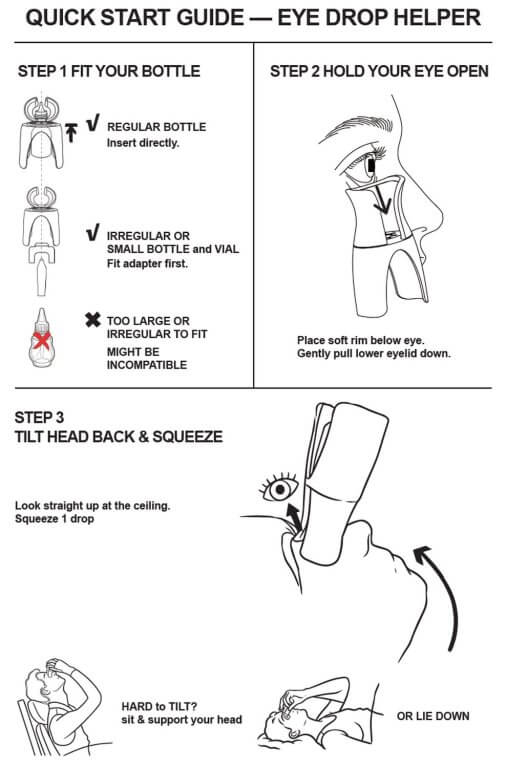
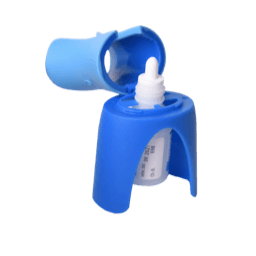
Eye Drop Guide / Applicator – Designed to help steady the bottle and aim correctly.
-
Ergonomic gripping aids – For removing caps, handling bottles, when arthritis or hand weakness is present.
These tools are created to support independence, reduce frustration, and help users follow safe eye-drop routines.
Caregiver & Family Support Tips
-
Sit beside the person receiving drops and allow them to hold your hand or steady the bottle.
-
Provide a visual cue or reminder at the same time each day (after breakfast or before bed).
-
Keep an application log or checklist to track drops, especially when multiple medications are involved.
-
Ask the eye-care professional about large-print labels or simplified packaging if vision or dexterity is limited.
Additional Tips:
- Store your eye drops as instructed—some drops need to be kept in the refrigerator.
- If you struggle with eye drop application, ask your doctor about eye drop guides or assistance tools to help aim and apply the drops accurately.
- Never share your eye drops with others to avoid cross-contamination.
Consider Using an Eye Drop Guide
For more accurate application, particularly if you have difficulty with hand movements or blinking reflex, an eye drop guide can be helpful. Devices like the Remedic Eye Drop Guide keep the bottle steady, ensuring proper drop placement without needing to touch your eye. This can be beneficial for individuals with conditions like arthritis, tremors or reduced hand strength.
Following these simple steps can make administering eye drops easier and more effective, ensuring you get the full benefit of your medication. Always consult your doctor or pharmacist if you have any questions about using your eye drops correctly.
🧠 Common Questions Seniors, Caregivers & Families Ask
Do I need more than one drop?
No—one drop is enough. The eye can’t hold more; a second drop often just washes the first out and raises side-effect risk. The Medical Letter+1
How long should I wait between different drops?
Wait at least 3–5 minutes between different medications so the first drop isn’t diluted. If you also use ointment, do drops first, then ointment after ~5 minutes. AAO+1
What is “pressing the inner corner” and why do it?
After the drop, close your eye and press gently on the inner corner (near the nose) for 1–2 minutes (called punctal occlusion). It keeps medicine from draining into your nose/throat and may reduce side effects. Some glaucoma groups suggest up to 3 minutes. National Eye Institute+1
Can I use drops while wearing contact lenses?
Usually remove lenses first. Many prescriptions say wait 10–15 minutes before putting lenses back in. Always follow your label/doctor. MedlinePlus+2MedlinePlus+2
My drops sting—should I worry?
A brief, mild sting can happen. Persistent burning, pain, or worsening redness means call your eye doctor. Preservatives and pH differences can irritate some eyes; preservative-free options may help if you use drops often. (General practice advice aligned with ophthalmology guidance.) AAO
Are “redness relief” drops okay to use often?
Be cautious. Many decongestant “get-the-red-out” drops can cause rebound redness when used repeatedly. Ask your eye doctor about safer alternatives. AAO+1
How should I store my eye drops?
Follow your label. Most can be stored at room temperature away from heat and light; some specific products need refrigeration. When in doubt, check the package insert or ask your pharmacist. AAO
How long can I keep an opened bottle?
Follow the product’s instructions. Many clinicians tell patients to discard multi-dose bottles after about a month, but this is not universal and some guidance for clinics differs. Check your label or pharmacist for the correct “after opening” time for your brand. AAO+1
What if I miss a scheduled eye drop dose?
If you forget, apply the drop when you remember and then continue with your next scheduled dose. Do not double the drop unless instructed by your physician.
My hands tremble and I can’t aim the bottle—what can help?
Use both hands: one to steady the dropper, the other to pull down the eyelid. Rest your elbow on a table or use a drop-aid tool. Ask your eye-care provider about devices designed for shaky hands.
Can I use two different eye-drop bottles back-to-back?
Yes, but wait at least 3 to 5 minutes between different types of drops for the same eye so the first isn’t washed away. Prevent Blindness
How often do I need to replace my eye-drop bottle?
Check the manufacturer’s label for “discard after ___ weeks after opening”. If the bottle is expired, cloudy, or contaminated (tip touched eyelid), discard it. AARP+1
Are over-the-counter drops always safe?
Not always. Some OTC drops carry risks, especially when misused. Always buy from trusted retailers, follow instructions, and ask your optometrist or pharmacist if you’re unsure. Cleveland Clinic
Final Thoughts
Applying eye drops doesn’t have to be stressful or difficult — especially when you use the right approach and tools. Whether you’re a caregiver helping someone else, or managing your own eye drops, the steps above paired with Remedic’s ergonomic aids can make the process smoother and safer.

At Remedic, we believe that good design empowers independence. Let the right routine and the right tools restore confidence in everyday moments.
Remedic – Smart, ergonomic living aids for every age and ability.
Make Taking Pills Easier — For Any Age
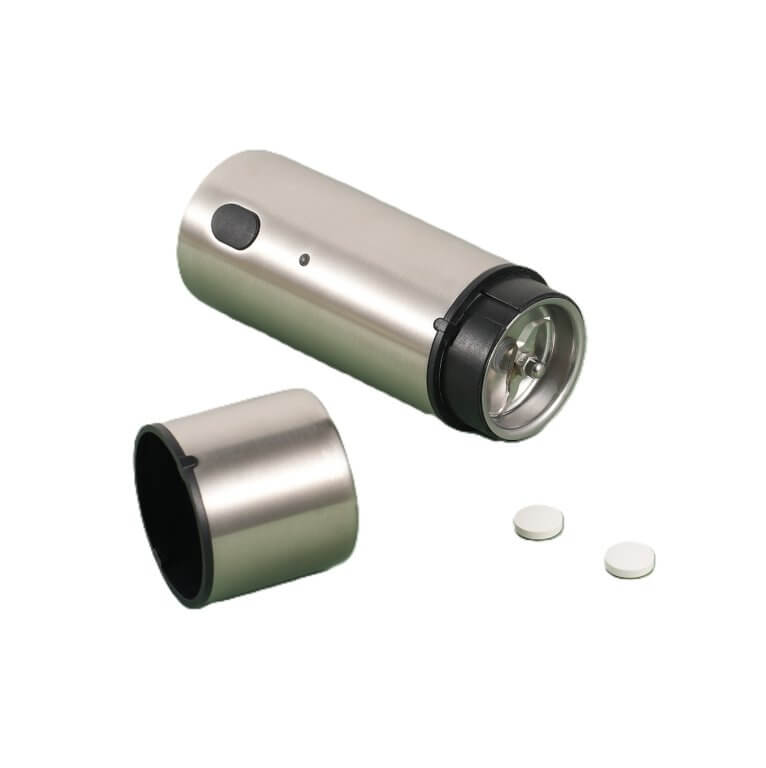
Meet the Remedic Rechargeable Pill Grinder & Crusher
(For vitamins, tablets, supplements, and daily medication)
Swallowing large pills can be frustrating at any age.
Big vitamins, hard tablets, daily supplements, or medication can be uncomfortable — and for many people, nearly impossible to swallow without help.
The Remedic Cordless Electric Pill Grinder & Crusher is a modern solution that turns tablets into fine, easy-to-take powder with almost no effort. Whether you’re a young adult taking large vitamins, someone recovering from surgery, a caregiver preparing doses, or simply tired of struggling with pills — this tool makes life easier.
 Why People Love the Remedic Grinder
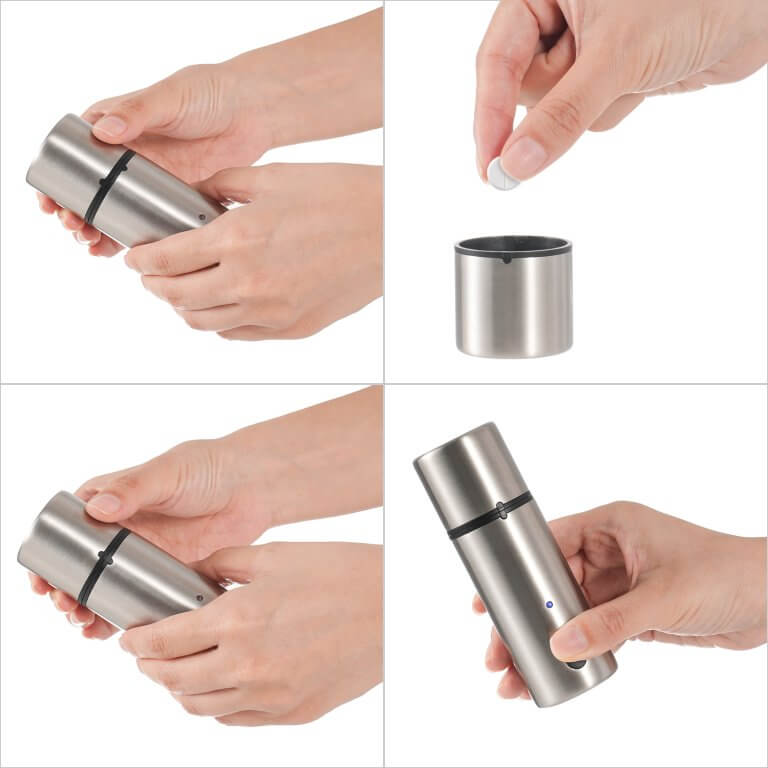
 Effortless One-Touch Grinding
Press the button, and the grinder does the work.
No twisting, squeezing, or physical strain.
Ideal for Large Pills & Supplements
Designed to handle big tablets and vitamins that are difficult to swallow, producing a smooth, even powder in seconds.
Comfortable for Everyone
Great for people with:
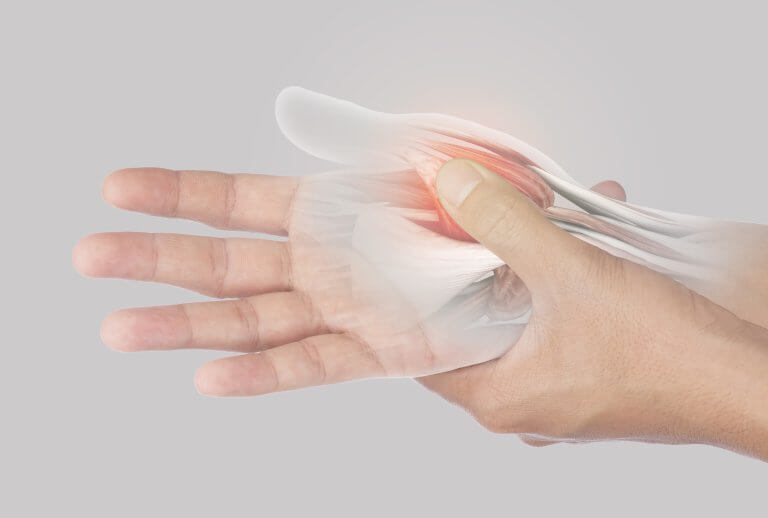
weak grip
hand fatigue
arthritis
tremors
or anyone who wants a simpler routine
It’s also perfect for those who just want a convenient, mess-free way to crush vitamins or tablets.
USB-C Rechargeable
No batteries needed.
Charge it just like your phone — fast, simple, and reliable.
Safe & Easy to Use
Built-in safety features ensure grinding only starts when everything is properly closed.
LED lights guide you through charging and operation.
Hygienic & Easy Cleaning
The grinding cup can be washed with water, and the main unit wipes clean.
A small brush is included to remove leftover powder.
Compact & Travel-Friendly
Perfect for home, work, school, or travel. Fits neatly into bags and small spaces.
 Who Is This Grinder Perfect For?
People who struggle swallowing large pills
Adults taking daily supplements
Individuals recovering from surgery
Teens or adults who dislike tablets
Athletes taking large vitamins
Caregivers preparing medication
Seniors wanting an easier routine
Anyone who prefers powder over pills
This isn’t just for one group — it’s for anyone who wants a smoother, simpler way to take their pills.
 What Users Are Saying
“Finally a clean, easy way to crush my vitamins.”
“Perfect for my daily medication routine.”
“Makes the powder really fine — super helpful.”
“I love how simple the USB-C charging is.”
 Where to Buy
 Available now on Amazon USA & Canada
Fast shipping • Easy returns • Trusted brand
Remedic Cordless Electric Pill Grinder & Crusher
ASIN: B0FBRRGW1J
✅ Q&A Section
Q: Who can use the Remedic Pill Grinder?
A: Anyone who finds large pills uncomfortable or difficult to swallow. It’s helpful for adults, teens, athletes taking big vitamins, people recovering from surgery, caregivers preparing doses, and seniors who want an easier daily routine.
Q: What types of pills can it grind?
A: The grinder works well for most vitamins, tablets, and supplements. It turns them into a fine powder that’s easier to mix with soft food or liquids (as recommended by your doctor).
Q: Is it easy to operate?
A: Yes. Press the button to activate, and the grinder does the work automatically. There’s no twisting, squeezing, or manual crushing required.
Q: Is the grinder rechargeable?
A: Yes. It uses USB-C charging, just like most modern phones. No batteries needed.
Q: Does it work for people with weak grip or hand fatigue?
A: Absolutely. The one-touch design makes it ideal for people with low hand strength, arthritis, tremors, or anyone who wants a more comfortable pill-crushing experience.
Q: How do I clean it?
A: The grinding cup can be washed with water. The main unit should be wiped with a dry or slightly damp cloth. A small brush is included to remove leftover powder.
Q: Can I travel with it?
A: Yes. The compact size makes it easy to store in a bag or backpack. It’s perfect for home, travel, school, or the workplace.
Q: Is it safe to use?
A: Yes. Built-in safety features ensure the grinder only works when everything is properly locked. LED lights guide you through the process so you always know what the device is doing.